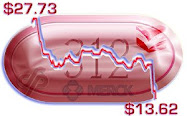
Monday, May 20, 2013

Since I've Been Comparing Merck To Apple -- On Repatriation -- Here's Is (Apple CEO) Tim Cook's Testimony, For Capitol Hill, This Week


UPDATED: 6:05 PM CDT | 05/20/13 -- The New York Times now has released its piece on all of this, online -- and Apple's Time Cook gets excoriated in it -- for some of the hyperbole in his 17 pages, below. In my estimation, it is only a matter of time before the Times catches up to Merck and Pfizer. And possibly Congress will, too. [End, updated portion.]

At some point tomorrow, I'll get around to explaining the ways in which Apple's corporate structure, and use of CFCs, or controlled-foreign-corporations, differs from Merck's approach. [Hint: It primarily involves the transfers of intellectual property, to generate more income in tax haven jurisdictions -- in Merck's case.] But for now, you may safely assume that -- in the main -- they are largely similar. At least similar enough to make it worthwhile to watch what Apple does -- on foreign cash repatriation, as a "canary in the coal-mine" -- for what Merck might do.

And so, here is the advance-copy (that is some 17 pages of PDF goodness!) of Mr. Cook's upcoming testimony before Congress -- on Apple's recent $17 billion debt issuances, its unimaginably large $60 billion stock buyback program. . . . all of which drives his call for reform of the United States corporate tax code (which, he argues, makes most of these complex financial machinations necessary).

Having said all of that, though -- Apple does pay an immense amount of US corporate income tax. Mr. Cook estimates that Apple is responsible for almost $1 of every $40 the US Treasury collects, in corporate income taxes, from all corporate taxpayers -- paying more than $6 billion in federal taxes in 2012 (which, to be fair, of course -- may just mean that companies like Merck and Pfizer aren't paying their fair share). Wow. Apple's effective 30.5 per cent federal income tax rate here in the US is much higher than Merck's (which stood at 27.9 per cent at year end 2012, but was around 11 per cent in 2011) -- and dwarfes Merck's 2012 $2.44 billion in tax payments, on a dollar for dollar basis.

. . . .Apple, a California company, employs tens of thousands of Americans, creates revolutionary products that improve the lives of tens of millions of Americans, and pays billions of dollars annually to the US Treasury in corporate income and payroll taxes. Apple’s shareholders – from individuals and institutions to pension funds and public employee retirement systems – have benefitted from the Company’s success through the appreciation of its stock price and generous dividends. Apple safeguards the capital entrusted to it by its shareholders with prudent management that reflects the Company’s extensive international operations. Apple complies fully with both the laws and spirit of the laws. And Apple pays all its required taxes, both in this country and abroad. . . .

More tomorrow. And by the way, Merck CFO Kellogg did talk about why he did the aggregate of $6.5 billion debt deals last week, and why the $16.5 billion stock buy-back is happening now, at Merck -- but didn't even remotely hint at repatriation, in his UBS talk today, in Manhattan. And he didn't mention the underwriters' conflict of interest -- even though Merck did a much more complete job of disclosing it, under FINRA Rule 5121, than Apple did -- in its similar definitive 424(b) debt prospectus, of early May.

Suvorexant Update: Still On Track For 2013 FDA Approval, Sales Uncertain In Crowded, Genericized Sleep Space


The good news here is that nothing untoward has turned up in this morning's FDA reviewer/staff packet, in advance of Wednesday's FDA Advisory Committee meeting.

The candidate is still on track. However, the pitch has always been that suvorexant's appeal would lie in its "next morning clarity" -- that is, it would not be associated with impairment in the morning after being taken -- as so many previously FDA approved sleep aids are, on market.

The FDA reviewers are now noting some morning after impairment -- and talking about lower initial dosings -- all in a space full of generic competitors. That makes the sales outlook a little cloudy. A bit from Reuters, then -- do go read it all:
. . . .Merck's experimental insomnia drug suvorexant appears generally effective, according to reviewers at the U.S. Food and Drug Administration, but they questioned the company's proposed dosing levels.

The reviewers posted their comments on the FDA's website on Monday, two days ahead of a meeting of outside medical experts which will advise the agency on whether or not it should approve the drug. . . .
We will of course keep you posted on Wednesday afternoon, but I expect a solid majority vote, in favor of US FDA approvability.

In Ten Days, Linda Secrest Will Likely Know Whether The Supreme Court Will Grant Her A New Fosamax® ONJ Trial


As I mentioned here on May 5, I don't hold much hope for Mrs. Secrest. Here's a link to the Supremes' docket sheet, on the Secrests' petition.

I think the Supremes will leave the decision of the Second Circuit undisturbed. I expect they will deny cert. without an opinion. I'd expect it to be part of a long list of no cert. dispositions, by the Court.

In fact, Merck seems pretty confident: Whitehouse Station has waived its right to brief the court on the reasons why it might feel the Second Circuit's decision -- upholding the able trial Judge Keenan's summary judgment for Merck -- was correct. Here's a bit from Law 360, as to what the appeal is all about -- do go read it all:

. . . .The physician at issue, Dr. Lawrence Epstein, testified in a deposition in 2008, before Merck filed a summary judgment motion, that he had not known Secrest was taking Fosamax in 2004 and 2005, after she had started seeing another doctor.

When he was deposed again in 2011, after the motion was filed, he said he had known about Secrest's Fosamax use during those two years, and that he would have advised Secrest to stop taking the drug if Merck had warned him of the jaw-related risks.

"If the Second Circuit had applied the more expansive standard of the Seventh Circuit, it would have determined that Dr. Epstein's second deposition was merely a conflicting deposition, not a sham," Secrest's petition states. . . .


We will let you know how the May 30 Supreme Court Conference session on this one turns out -- but I'd be very surprised if they grant Mrs. Secrest a hearing, or any sort of remand for new determinations on this trial record.

All of that said, though -- I do think the Seventh Circuit's formulation of the test more reliably comports with our long-standing notion that issues of fact (and credibility) should be left in the hands of a jury to decide. I suppose it is possible here, that Judge Keenan (who sat through the whole trial with the jurors) found Dr. Epstein's statements so lacking in credibility that he decided no reasonable juror could rely on either version of the doctor's testimony, and thus took the matter out of the jury's hands, altogether.

Sunday, May 19, 2013

2013 Thesis: Merck's Stock Is Almost Certain To Rise -- Through At Least The End Of Year


There will be dips, and there is always the remote possibility of some vast disaster hitting Merck's sales line in 2013. That much must be said at the outset. But it would have to be a more than 10 per cent real decline, to matter this year1. Why? Well, because Merck is pulling some non-operating financial levers, and very adroitly so, at the moment.

In sum, I'll conservatively predict an overall three to six per cent Merck NYSE stock price increase, net of everything else, by year end 2013. This will be true, I predict, even if not all its expected 2013 "in the pipeline" FDA approvals materialize.

With all the financial engineering now being laid into Merck's second half of 2013, it is hard to see how the stock won't -- in general -- rise more often (and in greater amplitudes) than it sinks. It is likely that some $10 billion worth of Merck's common stock will go back into its treasury account during 2013, decreasing outstandings. It is also highly likely that Merck will bring home a like amount of cash, from overseas, at near-nil tax rates, and thus pay off most of the debt it issued last week. [Of course, not one for one (many of the trauches are multi-year) -- but the cash returned is fungible, and will decrease interest expense -- and soon.] Thus, every penny it doesn't spend on taxes (for repatriating dividends) will fall right to the EPS line, and be levered with a debt reduction effect.

And that EPS line will garner the benefit of a smaller denominator -- over 12 per cent fewer outstanding shares over the life of the buyback, which will concentrate Merck's reported earnings over a smaller base of shares. This EPS levering will begin slowly, as the share equivalents are counted on 360 days outstanding as a linear average, in a year -- but the share count will drop significantly in the back half of 2013, if Merck gets started repurchasing shortly. [And remember, Merck's dividend is nearly a riskless almost four per cent cash return, every year, on each share.]

Now, on top of all of that (the factors within Merck's control), we will see an "out of Merck's control" knock-on effect. That knock on effect will appear, as many of the investment banking houses (through their buy side analysts) shortly start increasing their 12 month targets, for Merck's NYSE stock price, even if sales of Januvia® remain fairly underwhelming through all of 2013. They will do so, because they know that the above financial structuring steps will net, net actually increase Merck's unrestricted cash flows, by year end (and very tax efficiently so), and in perpetuity. UPDATED: Here is a list of bankers, from which I'd expect we will see increased 12 month NYSE price targets -- as each of them were underwriters of Merck's debt last week, and each of them undoubtedly have clients holding Merck stock, even if the smallest among them don't hold Merck stock directly as a firm. The names cover all of Wall and Broad: BNP PARIBAS, Deutsche Bank Securities, J.P. Morgan, Morgan Stanley, BofA, Merrill Lynch, Citigroup, Credit Suisse, Goldman, Sachs & Co., HSBC, RBS, UBS Investment Bank, Drexel Hamilton, Santander, SOCIETE GENERALE, Standard Chartered Bank, SMBC Nikko, US Bancorp, Wells Fargo Securities and The Williams Capital Group, L.P. [End, updated portion.]

Afterall, even if Merck pays somewhat higher prices, on the NYSE, for these repurchased shares (due in part to the conflicted interests the investment bankers now have -- to get their Merck shares, and those of their clients, repurchased at marginally higher prices) -- Merck's tax benefit will very likely still outstrip the increase in Merck's NYSE quoted price per share. That is, I don't expect that Merck's NYSE price will increase by more than the tax rates -- on a percentage basis -- had Merck repatriated the same amount of offshore cash, using a strategy that required Merck to pay "full-freight" federal income taxes.

In short, the (would-be) Masters of the Universe on Wall Street are lining up, all with powerful incentives to drive Merck's stock price north -- almost without regard to how Merck's operating business fundamentals pan out in the back half of 2013. So, even a slightly better than expected performance from any of the operating businesses, in 2013, will magnify the effect of all the above financial manuevering.

My advice? Do not go short on Merck in the rest of 2013 -- or buy puts -- unless you plan to buy and hold a multi-year position.

The scenarios for sustained NYSE price declines, at Merck -- are all but evaporating, even if currencies take another 7 or 8 per cent from the global sales line -- by year end. You've been warned. Know that Merck's stock is over 75 per cent held by large institutional investors, and they've figured all of this out, as well. They will sell a little, as the stock rises, and buy a little more, if the stock dips. This is essentially a downside protection structure for Merck's common stock.

~~~~~~~~~~~~~~~~~~~~
1. I expect the same effects will appear at Apple in 2013 through 2014 -- only in even larger proportions -- as its benefits from the same strategies will be proportionately-larger, than Merck's. Just FYI -- of course, do your own diligence here -- but know that I've been a bear on Merck for quite a while. For 2013, I am now a bull.

Saturday, May 18, 2013

Merck CFO To Talk About "What's Next" -- At UBS In Manhattan Monday Morning


Assuming I am not stuck in meetings (or attending to other duties), I'll tune in -- at least for the replay, at day's end. My guess is that he'll offer a little local color on the largest single takedown debt deal in Merck's history, just completed this past week. UBS Investment Bank was a co-lead underwriter, on the 2016, 2018 Floating Rate, 2023, and 2043 Notes (see the prospectus cover page, bottom table -- tombstone lineup).

I'll also point out, in passing, that all the underwriters had a significant conflict of interest last week. That is so, because Merck intends to use the bulk of the $6.5 billion borrowed to buy-back its own common stock. So, it is true that the underwriters -- UBS included -- were essentially raising the money, from their clients. . . to help pay themselves, as they run (and, in various combinations, from time to time actually sell Merck back some of the bankers' own Merck stock-holdings -- and their clients' holdings, of Merck common stock) -- all as the massive Merck $16.5 billion stock buyback program steams out of the roundhouse.

Thus, they are all "conflicted-interest" underwriters, but largely exempt from the special rules applicable to conflicted-interest underwriters -- since Merck's paper is high-end investment grade, and comes from a seasoned issuer. [See the prospectus quote below.]

I bet Peter Kellogg won't mention any of that -- but feel free to register, and listen in, yourself. 

That said, I don't expect any major news on the overall business fronts, given that the Womens' Health lead just presented last week at another conference, and had little new to say -- and nothing of a materially-new nature. Here's the prospectus disclosure I mentioned above (page S-23), folowed by the EON notice, announcing the UBS conference:

. . . .We expect that a substantial portion of the net proceeds from this offering will be used to repurchase our common stock through one or more of the underwriters. Accordingly, affiliates of one or more of the underwriters will receive more than 5% of the proceeds of this offering, not including underwriting compensation. As a result, such underwriters will have a "conflict of interest" as defined in Rule 5121 adopted by FINRA. Consequently, this offering will be conducted in accordance with Rule 5121. No underwriter having a conflict of interest will confirm sales to accounts over which discretionary authority is exercised without the prior written consent of the account holder. In accordance with Rule 5121, a "qualified independent underwriter" is not required because the notes offered are investment grade rated, as that term is defined in Rule 5121. . . .
[snip]
. . . .Peter N. Kellogg, executive vice president and chief financial officer, Merck, is scheduled to present at the UBS Global Healthcare Conference in New York City on May 20, 2013 at 10:30 a.m. EDT. Investors, analysts, members of the media and the general public are invited to join a live webcast of the presentation at: http://www.merck.com/investors/events-and-presentations/home.html. . . .

As to the UBS $50 stock price target -- we will see whether UBS analysts offer an upward revision, after the talk. I'll let you know, if they do. It is absolutely true that all these debt underwriters now have a powerful incentive to increase their price targets, on Merck common stock -- and thus (they would hope) increase the price at which Merck buys back the common stock they hold, and the stock their clients hold. Do stay tuned.

I'll offer some analysis of what FINRA rules -- 5121 in particular -- will mean, in terms of Merck's likely NYSE mid-term price trend, tomorrow morning, over my Sunday morning coffee.

Friday, May 17, 2013

"Down Under"; Not Done -- Vioxx® Class Action Not (Yet) Settled: Federal (Australian) Judge


Just exactly one month ago, I mentioned that I thought the Australian class action settlement of the Vioxx® claims, filed there -- was in danger of not being approved by the able judge overseeing the case.

This morning, Sydney time (Thursday EDT US), the judge formally rejected the aggregated $504,000 settlement -- for all 1,700 potential claimants -- saying it did not adequately take into account how individual circumstances might change payouts. [A sincere hat tip here, to that gent Ed Silverman, over at Pharmalot, for alerting me to this.]

Here's the operative bit, from the online Sydney Morning Herald "Business Day" section -- but do go read it all:

. . . .The parties last month reached a $540,000 settlement, subject to Federal Court approval, which would have resulted in the proceedings being dismissed and the matter finalised, meaning no future claims could be brought against Merck over the drug.

Justice Christopher Jessup on Friday refused to approve the settlement. He said the agreement did not take into account individual circumstances and may not be fair to those who had a stronger case against the drug company. . . . "I don't just consider myself to be a street sweeper," he said.

"I want to know what's really lying around and whether people's interests or rights are being affected. . . ."

We will keep you posted.

However, this likely means Merck, or MSD Australia, more precisely, will have to both put more money on the table -- and set up a matrix which awards multiplier amounts (or reduction factors), depending on various medical conditions/events, in individual claimants' cases. That matrix will take time to negotiate, and new notices will need to be prepared and sent out. After all this, the same judge will be asked to approve (or diapprove) the renegotiated settlement terms.

And so -- Vioxx is not going to be entirely in Whitehouse Station's rear view mirror in 2013, after all -- it would seem.

Thursday, May 16, 2013

New Appearance, In A Leading Role: BNP Paribas Is Lead Book-Running Manager Of Merck's $6.5 Billion Debt Deals


While the lineup -- on down the tombstone/card -- of Merck's underwriters contains all the usual names, CFO Peter Kellogg's choice of BNP Paribas Securities Corp. as the book-running lead suggests one of two things: (1) BNP Paribas offered "loss-leader" style-pricing to win the lead role, or (2) Merck is sending a message to the usual line-up of bankers -- that their roles will not always be assured.

These sorts of huge traunche debt deals are -- when issued by high-end, stable, seasoned issuer credits like Merck (and Apple) -- essentially a license to print money, at the investment banks granted lead or co-managing roles.

The fee income (on commissions) is the first (smallest) piece, and on a deal of this size, the incremental work is tiny -- compared to the size of the fee. But the real money is made in the after-market, as the investment bankers may engage in various "market stabilization" activities for several weeks after yesterday's initial sale. "Stabilization" includes profiting handsomely on the aftermarket positions -- as the banks may be both bookmakers, and traders, during this time frame.

From the overnight pricing sheet, filed with the SEC after 10 PM EDT last night -- where to call to get a prospectus:
. . . .BNP Paribas Securities Corp. toll free at 1-800-854-5674, Deutsche Bank Securities Inc. toll-free at 1-800-503-4611, J.P. Morgan Securities LLC collect at 1-212-834-4533 or Morgan Stanley & Co. LLC toll-free at 1-866-718-1649. . . .
We will -- as ever -- keep you informed, but the other thing that's clear from yesterday's selection of BNP Paribas is that it was not undertaken to win favorable equity analyst coverage. Why? Because the investment house doesn't follow Merck, on the equity side. Now you know.

Wednesday, May 15, 2013

Moody's Cited Merck's Debt For Not Being Guaranteed By MSD -- But That's What Makes Merck's Repatriation Tax-Free


Yesterday, Moody's dropped Merck's debt ratings by one notch. Yawn. Merck is still firmly at the higher end of investment grade. [My backgrounder here, on all of that to and 'fro.] Moody's took special note of the fact that MSD -- Merck's primary non-US subsidiary -- would not be on the hook for Merck's upcoming debt issuances.

Today, Merck priced a $6.5 billion series of six debt traunches. None of the traunches is guaranteed by MSD. Why?

Because Merck intends to use the $6.5 billion borrowed -- ultimately -- to acheive a repatriation of MSD's foreign net cash earnings, free from United States federal income taxation (on deemed dividends), that's why.

By preventing (disallowing, actually) Merck's "controlled foreign corporation" (MSD) from backstopping today's debt issuances, Merck created a "US shareholder-only" obligation, in the language of applicable federal income tax regulations.

Merck will now ultimately fund the first large chunks of its stock buyback from the debt issued today, then use the MSD permanently-parked foreign net cash earnings to repay the non-guaranteed debt. Under several convoluted IRS memos, if Merck stirs its stock-buyback/debt issuances/debt repayment soup "just absolutely perfectly" [in Martha Stewart's affected New England clenched teeth accent, no less!] -- it will not have to pay federal income taxes on any part of these transactions. And it will have reduced the foreign net cash earnings it is presently holding through MSD second-tier subs (in Europe and Japan, primarily).

[To immensely over-simplfy a long series of intervening steps, here -- if MSD (with its own cash) pays off parent US Merck's debt -- when it is not contractually "on the hook" for it, IRS memos declare it is not a dividend ordered by the parent, US Merck -- and thus it is not taxable as part of Merck's repatriated earnings. If on the other hand, US Merck were to nakedly order MSD to send the cash home to pay an obligation MSD had backstopped anyway, that is plainly a "deemed dividend", in IRS speak.]

So -- again -- we see that Moody's knee-jerk reaction was simply ill-advised, and ultimately will mean nothing. The other debt rating agencies have put Merck on watch, but havn't downgraded it -- presumably because their analysts understand that bringing home foreign net cash earnings, tax free, is a good thing for both the Merck debt-holders, and the Merck common stockholders. Here's a bit from Merck's "Red Herring" 424(b) debt prospectus, filed this morning, with the SEC (at pages S-3 and S-5)

. . . .The notes are obligations exclusively of Merck and not of our subsidiaries, and payment to holders of the notes will be structurally subordinated to the liabilities of our subsidiaries.

The notes are not guaranteed by any of our subsidiaries and therefore the notes will be structurally subordinated to all existing and future secured and unsecured indebtedness and other liabilities of our subsidiaries. The indebtedness of our subsidiaries totaled $6.7 billion as of March 31, 2013. In addition, as of March 31, 2013, certain of our subsidiaries also guaranteed $6.3 billion aggregate principal amount of our existing indebtedness. Our obligations under the notes will be structurally subordinated to guarantees by our subsidiaries of our indebtedness. We also guarantee indebtedness of our subsidiary Merck Sharp & Dohme Corp. ("Old Merck"), including $6.2 billion aggregate principal amount of its outstanding debt securities (which is part of the $6.7 billion of indebtedness of our subsidiaries referred to above). Therefore the notes will be structurally subordinated to Old Merck's obligations with respect to those debt securities, and our guarantee of those debt securities will rank pari passu with the notes. The terms of the notes and the indenture do not preclude our subsidiaries from incurring debt or other liabilities or providing guarantees that will be structurally senior to the notes. . . .

We intend to use a substantial portion of the net proceeds of the offering to repurchase our common stock. . . .

Apple is doing it -- Merck is doing it. And Moody's doesn't get it (at least as to Merck). But that's all okay. The world will soon move on. Something new tomorrow, here.

A Big Chunk Of Whitehouse Station's Move To Summit Underway: Animal Health (Legacy S-P)


All of this was lined out as "in the works" last year, but it is now underway, in earnest.

Do go read all of last night's NJ Biz article -- but here's a bit:

. . . .Merck Animal Health will employ 300 people at a 145,000 square-foot building at the company’s Morris Avenue campus. The realignment of Merck’s animal health division, a global operation with more than 6,000 employees in 50 countries, is part of ongoing restructuring the New Jersey pharmaceutical company. . . .

Lt. Gov. Kim Guadagno, who attended the event, said the company’s decision to locate animal health operations — previously based in the Netherlands — in New Jersey is a boost for the state. . . .

Merck’s move of its animal health unit precedes a planned relocation of its corporate headquarters to Summit from the Whitehouse Station section of Readington by the end of 2015. Merck announced the move last year as part of a cost-savings plan. The pharmaceutical giant has announced several restructurings and work force reductions in recent years as it integrates with Schering-Plough, which Merck acquired in 2009. . . .

We will keep you apprised -- but, yes, this is sad (although by no means unexpected) news, for our good friends in Oss.

Tuesday, May 14, 2013

Will "Drug Reimportation" Rise Anew -- But This Time, By Another Name? Of "Moral Suasion" As Pricing Pressure?


Back in very early 2007, as Mr. Obama prepared for his first White House run, many of us gathered in Philadelphia to discuss practical ways to make United States health care delivery reform an important part of his manifold -- and then still emerging -- platforms.

Much talk centered around policies to liberalize drug reimportation rules, as it was clear that price disparities even between Canada and the US, meant that US patients were paying much more for the very same pills -- made in the very same facilities, than our good neighbors to the North. [I'll spare you the intervening narrative, of all that transpired -- since that February weekend.]

Fast forward to 2013 -- and pharma has largely taken reimportation off the table, by offering to kick in what started at $80 billion, and settled at around $100 billion, over ten years, to help close the donut hole. This is admirable -- but it probably won't be enough -- as I've said since early 2008.

No, here in 2013, as Obamacare is being implemented, day by day, I think we are going to see a "back-door" form of loosened drug reimportation rules. It will initially appear in the form of direct "moral suasion" -- on drug company pricing disparities -- even within the (awfully named) "first world" economies (US, Canada, Japan and the euro-zone, for starters). And, it will escalate, to more formal measures -- if need be.

Here is a bit of a good Reuters piece on it -- updating the state of the play. Do go read it all -- but I offer this bit, below, insofar as it mentions Whitehouse Station's Januvia® (until the end of Q1 2013, Merck's largest seller), by name:

. . . ."Over the intermediate term it doesn't look good for the industry. We will be facing enormous healthcare cost containment pressure in this country," said Joel Hay, professor, pharmaceutical economics and policy at the University of Southern California. "Big pharma will then have less and less resources to plow back into research and development."

It will mean less tolerance for wide variations in pricing for the same drugs. The wholesale U.S. price for a 100 milligram tablet of diabetes drug Januvia, the top-seller at Merck & Co, is $8.20, according to the company. The Common European Drug Database lists the same pill at $1.52 euros ($1.99) in Austria. . . .
There will be more -- but I must tend to other responsibilities, right now.

Monday, May 13, 2013

And, BTW -- Who Said Nerds Don't Have A Subtle Sense Of Humor?

I can't resist -- I should have done a better job, on the graphic for the story below. So, here's my second effort -- enjoy:


More substance -- later today. I'm out.

UPDATE On "Next-Gen" Melanoma Candidates: Merck's Lambrolizumab (MK-3475), Courtesy Bloomberg


This morning, Bloomberg is reporting that Merck's enrolling of a Phase II study on MK-3475, lambrolizumab (so named, as a dig at the most likely beneficiaries of the drug: gold-chain wearing, pot-bellied, high-multi-millionaire net-worth "Lamborghini-Lizards species"  -- at risk of melanoma, due to their penchant for flashy top-down driving!. . . where was I? Oh, right.), may turn out to be bigger than just the usual science backgrounder news it appears to be at first blush.

Why?

Because, at 500 patients, and with breakthrough status at FDA -- the Phase II 500 patient data just might be a large enough "n" to grant approvability, on that Phase II study, alone. IF the FDA accepts that argument, and that data is clearly, and appropriately powered, to demonstrate strong efficacy and safety. . . then Merck is essentially tied with BMS, and its nivolumab candidate, on timing. [As I had reported last month, Merck was about a year behind BMS, because Merck's initial safety study was too small to support direct NDA submission. It seems that is changing.]

This is materially good news for Merck. We will see if it moves the stock price on the NYSE.

Here is a snip, from the Bloomberg item -- do go read it all:

. . . .Merck, of Whitehouse Station, New Jersey, is in second-stage testing on its immune therapy, lambrolizumab, in melanoma. If successful, the 500-patient trial may be large enough to gain approval from U.S. regulators without completing the usual required third-stage of testing, putting it in a virtual dead heat with Bristol’s nivolumab in melanoma. . . .


We will keep the readership posted. PS: I've updated the graphic -- to include the MRL science crew's nomenclature joke, for MK-3475. It's the target, indeed!

Sunday, May 12, 2013

Even As US Drug Spending Fell -- For The First Time In A Half-Century


. . .Medical treatment/drug decision making waste still proliferated.

Do go read all of this fine article from the Memphis (Tennessee) Business Journal, but the papers nationwide were full of the news that -- for the first time in decades, prescription drug spending declined in the United States in 2012. That is due to the rise of generics, and health care reform -- the ACA of 2010 -- beginning to kick in (as well as, to a lesser extent, the still-slow to recover economy).

Even though this is good news, we must not lose sight of the fact that -- especially among the nation's poorest patients -- those receiving Medicaid -- we still waste nearly $56 billion a year. And that is money that could be used to improve care, for all Medicaid recipients, in a more effective manner.

Do go read Cole Epley's article -- but here is a bit:

. . . .Per capita costs related to wasteful prescription spending totalled $1,623 in Mississippi, which led the nation in terms of per capita costs; Mississippians also earn the lowest per capita personal income of all 50 states, according to data from the U.S. Department of Commerce and the Bureau of Economic Analysis. [Arkansas wasted $1,442 per person per year, and Tennessee wasted $1,434 per person per year -- also among the nation's most-poor states. . . .]

Express Scripts defined waste as "extra medication-related spending that provided no additional clinical benefit." Data suggested $55.8 billion was spent on high-priced medications when more cost-effective generics could have been used, for instance. . . .

"Our nation pays a huge price for bad medication-related decisions, and it is clear that the price is even more costly for those at the lowest end of the economic spectrum," Steve Miller, chief medical officer at Express Scripts, said in a release. The data showed per capita costs were the highest in the Southeast. . . .
We will keep you posted on the trendlines -- as Obamacare takes hold here in 2013. And to tie this back to Merck, I'd think specifically about Vytorin®, and newly-approved Liptruzet® when I think of expensive branded drugs which are providing no demonstrated additional clinical benefit.


Saturday, May 11, 2013

Quick Additional Thoughts -- On The Scope Of FDA's Regulatory Charter


A friendly, and long-standing, commenter mentioned a link below -- and I thought I'd post my answer, embellished a bit, as a new Saturday morning post, here. It amplifies this, of mine, from last Saturday, on Merck's winning Liptruzet® FDA approval.

Yes -- I did see that. Ed Silverman is a really sharp guy. He's right -- as is the guy he quotes -- who wrote for Forbes, on the same notion, on Thursday evening. I'm debating about whether I need to say more on the topic than I said last Saturday morning.

I do agree that the FDA risks denting its now largely-repaired reputation, here.

There was a time, during the second Bush-Cheney administration, when many (if not most) long-time industry watchers/insiders felt that industry had essentially acheived FDA "regulatory capture". That is, many felt that industry was able to subtly (but effectively) influence FDA's agenda -- due to high profile placements of former pharma insiders, in FDA policy-setting roles -- over the course of a decade. I personally never really worried that patient safety was being compromised, but I did worry that in some cases pharma marketing was trumping the soundest science. FDA wasn't asking "is this the MOST effective drug?" -- in a given class. But there was, and is, a perfectly benign reason for that. See below, for that.

With Mr. Obama's election, then, a fair portion of the "marketing" regulatory capture drew to a close, in my estimation. FDA today is far more transparent -- and more responsive -- to public health needs than it has been in decades (perhaps going all the way back to its halcyon days -- in the 1960s).

Having said that -- and personally wishing that FDA would actively look at "comparative effectiveness" when approving new drugs -- I do know that, strictly speaking, FDA's regulatory authority ends at "is it an effective and safe medicine?". . . not at "is it the MOST effective drug out there?"

While there are proposals to draft comprehensive comparative effectiveness regulations, under various parts of the ACA of 2010 -- these remain proposals, not law (yet).

So -- the experienced realist in me accepts that FDA would be likely have been sued by Merck, had FDA not approved Merck's Liptruzet -- its latest cholesterol management combo -- for exceeding FDA's currently-authorized regulatory portfolio.

And so -- as I wrote seven days ago, I think we have to count on the market-place, to make sure Liptruzet sees only very limited adoption.

As Ed said (but do go read it all):
. . . .Merck has been running the 18,000 patient IMPROVE-IT trial, but results are not due until September 2014. . . .

This prompts a question –- what happens if the results are unfavorable? Well, Merck is left with a pair of cholesterol pills generating flat to declining revenue. Even if the IMPROVE-IT trial results are favorable, the drugmaker faces a different dilemma, because the Vytorin patent expires in 2017. By winning approval for Liptruzet, Merck has found a way to overcome the odds.

This is where the skepticism and cynicism kicks in. In its announcement, Merck acknowledged that Lipruzet did not offer any “incremental benefit on cardiovascular morbidity and mortality over and above that demonstrated for atorvastatin” (read here). In other words, patients and physicians should not expect the combination pill to offer any advantage in reducing the chance of developing heart disease. . . .

This is a difficult -- and still very gray -- area. And, from Merck's perspective, in my opinion, Merck was just completing the last little bit of a huge legacy Schering-Plough spend, on the chance that IMPROVE-IT vindicates such combos.

Thanks so much for mentioning it, directly, Anon. Saturday mornings are always luminous, if not entirely clear, here. Even so -- I'm inclined to trust the nation's good doctors -- to figure this one out.

Friday, May 10, 2013

More "Roundin'-Up The Ole S-P Gang" News | Fact: Alex Kelly; Rumor: Carrie Cox(?) -- To B&L


This just turned up, in the "Goofy Deal Goggles" bin, as a rainy Friday morning unfolds. So, we once again take a quick look at the various legacy Schering-Plough executives (at least six, at last count) who've followed Fast Fred in one role or another -- over to the pre-IPO Bausch + Lomb C Suite -- to take one more ride on one of Fred's gilded Gulf-Streams.

Thanks entirely to our alert commenters -- we have one more confirmed -- and one more rumored. First, the facts: Merck has lost its VP of IR, Alex Kelly, who will join Fred, as his B + L Investor Relations maven (in much the same role he held at Pharmacia and Upjohn, and then at Schering-Plough, making him a triple bagger Fred follower):

. . . .Bausch + Lomb, the global eye health company, today announced that Alex Kelly has joined the company as vice president, Investor Relations, reporting to the company's president and chief financial officer, Bob Bertolini [also a Schering-Plough alum]. In this capacity, Kelly will serve as the primary point of contact for the investment community. . . .

Kelly joins us from Merck & Co., where he served most recently as vice president, Investor Relations. Prior to Merck, he was group vice president of Global Communications and Investor Relations at Schering-Plough. Earlier in his career, Kelly held senior Investor Relations roles with Novartis and Pharmacia & Upjohn. . . .


It will surprise me if Carrie Cox returns to the Fast Fred Fold -- given her other public company duties. [That is, I think she has a safer path ahead, if she stays put -- she'd at least arguably have to surrender her seat on the board of directors of Cardinal Health, a distributor of competing products, if she were head of pharmacy sales for B + L. She also sits on Celgene's board, and the board of Texas Instruments. Each of these public boards offer stable, safe income, and equity -- that is liquid. She is, in addition, CEO of a private company called Humacyte, at the moment -- lots of equity and cash there, as well.] Even so, Fred does have a way of platinum-plating his job offers -- to those most loyal to his causes. So -- it could be. It might be. But it is mere rumor, at this point.

Does anyone out there have a definitive piece of evidence on this? Do share.

Thursday, May 9, 2013

In Three Months, An Additional 450 Fosamax® Femur Fracture Cases Were Filed Against Merck, And Are Pending: That's Over 5,585 In Total


The net increase of about 450 cases is completely attributable to new femur fracture cases, allegedly related to Fosamax® use -- as the net number of similar ONJ cases has declined by about 20, net, net -- due to the Lone Pine order exclusions, entered by the very able Judge Keenan in Manhattan's federal District Court, thus far. [More of those will be dismissed this month, as the second deadline papers are finalized.] So, there are now 5,585 plaintiffs groups, and growing, day by day.

Below is a complete comparison of the first quarter 2013 disclosure, compared to the year end 2012 disclosure on the topic, specifically marked to show changes. As an unrelated side note, I've also included Merck's entirely new paragraph -- on Januvia®/Janumet® litigation, at the bottom -- fascinating. That appears to be emerging as another material trend in Merck's litigation defense spend.

All of this is in Merck's SEC Form 10-Q -- as filed after 5 PM EDT, this evening, at the EDGAR window.

Fosamax


As previously disclosed, Merck is a defendant in product liability lawsuits in the United States involving Fosamax (the “Fosamax Litigation”). As of DecemberMarch 31, 20122013, approximately 4,560990 cases, which include approximately 5,140585 plaintiff groups, had been filed and were pending against Merck in either federal or state court, including one case which seeks class action certification, as well as damages and/or medical monitoring. In approximately 1,230210 of these actions, plaintiffs allege, among other things, that they have suffered osteonecrosis of the jaw (“ONJ”), generally subsequent to invasive dental procedures, such as tooth extraction or dental implants and/or delayed healing, in association with the use of Fosamax. In addition, plaintiffs in approximately 3,330780 of these actions generally allege that they sustained femur fractures and/or other bone injuries (“Femur Fractures”) in association with the use of Fosamax.

Cases Alleging ONJ and/or Other Jaw Related Injuries

In August 2006, the Judicial Panel on Multidistrict Litigation (the “JPML”) ordered that certain Fosamax product liability cases pending in federal courts nationwide should be transferred and consolidated into one multidistrict litigation (the “Fosamax ONJ MDL”) for coordinated pre-trial proceedings. The Fosamax ONJ MDL has been transferred to Judge John Keenan in the U.S. District Court for the Southern District of New York. As a result of the JPML order, approximately 960940 of the cases are before Judge Keenan. In the first Fosamax ONJ MDL trial, Boles v. Merck, the Fosamax ONJ MDL court declared a mistrial because the eight person jury could not reach a unanimous verdict. The Boles case was retried in June 2010 and resulted in a verdict in favor of the plaintiff in the amount of $8 million. Merck filed post-trial motions seeking judgment as a matter of law or, in the alternative, a new trial. In October 2010, the court denied Merck’s post-trial motions but sua sponte ordered a remittitur reducing the verdict to $1.5 million. Plaintiff rejected the remittitur ordered by the court and requested a new trial on damages. Plaintiff and Merck subsequently entered into a confidential stipulation as to the amount of plaintiff’s damages that enabled Merck to appeal the underlying judgment, and Merck filed its appeal in the Boles case onin October 18, 2012. Prior to 2013, three other cases were tried to verdict in the Fosamax ONJ MDL. Defense verdicts in favor of Merck were returned in each of those three cases. Plaintiffs have filed an appeal in two of the cases – Graves v. Merck and Secrest v. Merck. On January 30, 2013, the U.S. Court of Appeals for the Second Circuit affirmed the judgment in Merck’s favor in Secrest. On April 30, 2013, plaintiff in the Secrest case filed a petition for writ of certiorari with the U.S. Supreme Court.

In February 2011, Judge Keenan ordered that there will be two further bellwether trials conducted in the Fosamax ONJ MDL. Spano v. Merck and Jellema v. Merck were selected by the court to be tried in 2012, but each case was dismissed by the plaintiffs. OnIn March 28, 2012, the court selected Scheinberg v. Merck as the next case to be tried. Trial in the Scheinberg case began on January 14, 2013 and, on February 5, 2013, the jury returned a mixed verdict, finding in favor of Merck on plaintiff’s design defect claim, and finding in favor of plaintiff on her failure to warn claim and awarding her $285 thousand in compensatory damages. On March 5, 2013, Merck filed a post-trial motion for judgment as a matter of law in the Scheinberg case and that motion is still pending.

Outside the Fosamax ONJ MDL, in Florida, Carballo v. Merck was set for trial on October 15, 2012, but plaintiff dismissed the case and refiled it in the Fosamax ONJ MDL. Anderson v. Merck had been set for trial on January 14, 2013, but plaintiff dismissed the case prior to trial.In November 2011, Judge Keenan issued an order requiring plaintiffs who do not allege certain types of specific injuries to provide expert reports in support of their claims. The deadlines for submission of these reports are staggered throughout the first half of 2013, and failure to comply with the order may result in dismissal of a plaintiff’s claim. The first deadline passed on February 20, 2013, and Merck submitted to the court on February 27, 2013 a list of several hundred plaintiffs who failed to comply with that first deadline. On March 13, 2013, Judge Keenan ordered that those plaintiffs who failed to provide reports by the February 20, 2013 deadline had 30 days to provide the required reports or, upon motion, the case may be dismissed with prejudice and/or the court may impose sanctions for failure to comply. To date, more than 225 plaintiffs subject to the order have dismissed their claims with prejudice.


In addition, in July 2008, an application was made by the Atlantic County Superior Court of New Jersey requesting that all of the Fosamax cases pending in New Jersey be considered for mass tort designation and centralized management before one judge in New Jersey. In October 2008, the New Jersey Supreme Court ordered that all pending and future actions filed in New Jersey arising out of the use of Fosamax and seeking damages for existing dental and jaw-related injuries, including ONJ, but not solely seeking medical monitoring, be designated as a mass tort for centralized management purposes before Judge Carol E. Higbee in Atlantic County Superior Court. As of DecemberMarch 31, 20122013, approximately 260265 ONJ cases were pending against Merck in Atlantic County, New Jersey. In July 2009, Judge Higbee entered a Case Management Order (and various amendments thereto) setting forth a schedule that contemplates completing fact and expert discovery in an initial group of cases to be reviewed for trial. In February 2011, the jury in Rosenberg v. Merck, the first trial in the New Jersey coordinated proceeding, returned a verdict in Merck’s favor. In April 2012, the jury in Sessner v. Merck, the second case tried in New Jersey, also returned a verdict in Merck’s favor. Plaintiffs have filed an appeal in both cases. On March 25, 2013, the New Jersey Appellate Division affirmed the judgment in Merck’s favor in the Rosenberg case.

In California, the parties are reviewing the claims of two plaintiffs in the Carrie Smith, et al. v. Merck case and the claims in Pedrojetti v. Merck. The cases of one or more of these plaintiffs may be tried in 2013.

Discovery is ongoing in the Fosamax ONJ MDL litigation, the New Jersey coordinated proceeding, and the remaining jurisdictions where Fosamax ONJ cases are pending. The Company intends to defend against these lawsuits.

Cases Alleging Femur Fractures

In March 2011, Merck submitted a Motion to Transfer to the JPML seeking to have all federal cases alleging Femur Fractures consolidated into one multidistrict litigation for coordinated pre-trial proceedings. The Motion to Transfer was granted in May 2011, and all federal cases involving allegations of Femur Fracture have been or will be transferred to a multidistrict litigation in the District of New Jersey (the “Fosamax Femur Fracture MDL”). As a result of the JPML order, approximately 8201,015 cases were pending in the Fosamax Femur Fracture MDL as of December March 31, 2012.2013. A Case Management Order has been entered that requires the parties to review 40 cases (later reduced to 33 cases). Judge Joel Pisano has selected four cases from that group to be tried as the initial bellwether cases in the Fosamax Femur Fracture MDL and has set an April 8, 2013 trial date for the . The first bellwether case, which will be Glynn v. Merck, began on April 8, 2013 and the jury returned a verdict in Merck’s favor on April 29, 2013. The Zessin v. Merck case is was set to be tried in September 2013; the Young v. Merck case is set to be tried in  but has been rescheduled for January 2014; the Young v. Merck and the Johnson v. Merck case is setcases are expected to be tried later in May 2014.

As of DecemberMarch 31, 20122013, approximately 2,075305 cases alleging Femur Fractures have been filed in New Jersey state court and are pending before Judge Higbee in Atlantic County Superior Court. The parties have selected an initial group of 30 cases to be reviewed through fact discovery. Judge Higbee has set March 11, 2013 as the date for the The first trial of the New Jersey state Femur Fracture cases, which will be Su v. Merck, began on March 11, 2013, but a mistrial was declared on March 28, 2013 after the plaintiff suffered a serious medical issue unrelated to her use of Fosamax that prevented her from proceeding with the trial. The next trial, Unanski v. Merck, is currently set to be tried beginning November 4, 2013.

     As of DecemberMarch 31, 20122013, approximately 420440 cases alleging Femur Fractures have been filed in California state court. A petition was filed seeking to coordinate all Femur Fracture cases filed in California state court before a single judge in Orange County, California. The petition was granted and Judge Steven Perk is now presiding over the coordinated proceedings. No scheduling order has yet been entered.

Additionally, there are eightnine Femur Fracture cases pending in other state courts. A trial date has been set for August 12, 2013 for the Barnes v. Merck case pending in Alabama state court.

Discovery is ongoing in the Fosamax Femur Fracture MDL and in state courts where Femur Fracture cases are pending and the Company intends to defend against these lawsuits.

Januvia/Janumet


As of March 31, 2013, there were 43 filed complaints against Merck alleging that plaintiffs’ use of Januvia and/or Janumet caused them to develop pancreatic cancer. These complaints were filed in several different state and federal courts, with the majority filed in the United States District Court for the Southern District of California. On April 5, 2013, a law firm representing certain plaintiffs filed a request with the JPML to create a federal MDL for lawsuits alleging pancreatic cancer due to use of the following medicines: Januvia, Janumet, and Byetta and Victoza, the latter two of which are products manufactured by other pharmaceutical companies. In its MDL request, the law firm asked the JPML to appoint Judge Anthony Battaglia of the United States District Court for the Southern District of California as the MDL Judge. On April 29, 2013, Merck and the other defendant manufacturers individually filed responses, all of which agreed that Judge Battaglia should preside if the JPML determines that an MDL is warranted. The Company intends to defend against these lawsuits.


We will, as ever, keep you informed, as the next Fosamax trial date approaches.

This May Take A Few Days. . .

Especially since I am particularly busy with other duties, at present -- I am uncertain as to whether I will be in a position to provide coverage of the just-filed New Jersey gender and maternity discrimination lawsuit against Merck. I want to more carefully analyze the complaint -- especially since it seeks federal class action status, and makes a rather um. . . eye-popping damages calculation.

And so, you'll find no links to it, here, yet.

For now, I am going to remain silent on it. I want to be rather circumspect on this -- if every word of it turns out to be true, and provable, it covers enough sales reps that it might become material to New Merck, at some future point.

But without a careful review of the evidence, and without an officially-filed answer at law to the complaint, it would be irresponsible to lend too much credence to the plaintiffs' assertions.  At least for now.

Afterall, Merck is regularly lauded, by numerous independent analyses, for being a very-mom friendly place to work. That doesn't mean the plaintiffs aren't right -- it just gives one a little pause.

GSK And Merck Are Certainly To Be Commended, Here [With A Footnote]


This morning's coverage of Whitehouse Station1 is dominated by the joint Glaxo-Merck announcement, with GAVI, of a very-low cost HPV vaccine initiative in the developing world -- some 40 countries by 2020. The aim is to vaccinate over 30 million girls -- and thus prevent the burden of the disease of cervical cancer -- at least the strains of cervical cancer caused by chronic HPV infections. At $4 to $6 per, as compared to over $100 per, here in the States, this is a very generous, humane and charitable endeavor.

As The Guardian noted over this past weekend, though -- I'd be less than candid if I didn't mention that cervical cancer is not a "top five" cause of mortality in most of these 40 countries. It is true that most of those women who do die of cervical cancer tend to live in the developing world, because -- as a rule -- the disease goes undiagnosed for many many years, in most cases. But that is not the same as being a "leading" cause of death, in these countries.

At least in Africa, one of the first countries to benefit from the initiative, women are far more likely to die from complications in childbirth (primarily sepsis from infections, and ruptured-uterus related bleeding), than cervical cancer. Data also suggest that men are far more likely to die of hypertensive disease, diarrheal disease and HIV/AIDS. And, candidly, each of these public health burdens would be far more expensive to widely address -- than a three-shot regimen of vaccines.

No doubt abut it, the HPV vaccines will save thousands of lives. But the vaccine is highly unlikely to save the lives of millions of women, primarily because they are likely to die of other causes, related to inadequate access to basic health care. That is, we should not expect a one-to-one correlation in doses administered, connecting to an equal number of lives saved.

UPDATED: Noon | 05.09.13 EDT -- I should have noted specifically that I think the New York Times' "275,000 deaths/year from cervical cancer in the developing world" figure. . . is not helpful, and perhaps a little misleading.

There is no evidence that these cervical cancer deaths in Africa, for example, are from the small handful virally-induced cervical cancers the vaccines prevent. [No one is paying for the tests needed to do a truly-precise post-mortem analysis, on the specific strains of virus/types of cancers these women are dying of  (it's all just likely listed as "cervical cancer" to the extent it is reported at all, in Sub-Saharan Africa, of that much I am certain.] There is also no evidence that the HPV vaccines on sale at deep discounts, are as effective against the most common strains which cause cancer, in Africa, for example. My understanding is that there are over 20 strains in Europe and North America alone. As is often true, mutations are likely to have occured, by geography -- and so, we cannot assign one-for-one results in Africa, for example, to North American data.

Surely, there will be some hefty number of saved lives, but I'd guess-timate the figure at closer to 10,000 than any figure over 100,000 -- especially in this, the pilot phase, with only a few hundred thousand doses being made available -- for all the above reasons. [END, UPDATED PORTION.]

Here is the Wa Po on today's news -- in any event:

. . . .Starting with pilot programs in eight Asian and African nations, the ambitious project ultimately is intended to inoculate more than 30 million girls in more than 40 countries by 2020. Given that most women killed by cervical cancer live in developing countries, the project could have a huge impact. . . .
Do not misunderstand, this is a very good thing -- no two ways about it -- we just need a whole lot more of it, in many many more disease states. Primarily in the truly heaviest burden of disease-states -- now. The "we" I refer to, is the "we" -- of the peoples -- all peoples, as a planet. We can do it -- the question is do we have the will to do it?

~~~~~~~~~~~~~~~~~~~
1. You may generally assume, as I've written in the past, that if I don't mention a set of Merck press releases, it is because they are either puffery, or definitively immaterial to Merck's prospects and financial condition. Exhibit A for that proposition, would be yesterday's ragweed FDA BLA filing announcement. Here endeth my reminder.

Tuesday, May 7, 2013

Today's Object Lesson? There Will Be No Quick Answers -- For Alzheimer’s Disease Drug Candidates


I think Matt Herper, writing for Forbes, has a very well-thought out analysis of what the disappointing Baxter announcement of this morning -- on its GammaGard® (immunoglobulin) for Alzheimer’s research program -- might mean, for other companies working on an Alzheimer’s candidate. [Baxter's product is already on-market, around the globe, for other disease states. Baxter says it is stopping work in Alzheimer’s, as of today, though.]

I am forever fascinated by how often -- in human biology -- it seems that any given cognitive function disease/impariment is driven not by one or two clear defining change(s), in brain chemistry, or its DNA replication process -- but by perhaps thousands (or tens of thousands?) tiny, almost imperceptible ones. . . occuring seemingly almost at random. That, my friends, will likely make Alzheimer’s one very tough problem to solve.

Do go read all of Matt's take -- but I'd be a little concerned, if I were looking at Merck's current very high-spend R&D program, almost exclusively aimed at a pill for the Alzheimer’s Beta Amyloid pathway. Here's a bit from Matt:
. . . .Here’s what may make scientists working on Alzheimer’s disease nervous, though. Eli Lilly had noted a reason for hope when its Alzheimer’s antibody failed: it seemed to work in patients with mild Alzheimer’s disease, and not in those who had the more severe moderate form of the disease. Lilly is continuing to develop its drug.

It would be comforting if the Baxter trial had found the same thing. That would mean that this approach was consistently working in the same group of patients Instead, Baxter says it is seeing efficacy in the moderate form of the disease. This is more in line with what you’d expect if targeting beta amyloid resulted in only slight benefits or none at all. There will probably be more information as Baxter scientists continue to look at the results. . . .
I do not mean to sound overly-alarmist -- and it is not (yet) time to drop any of the other programs -- but it is very clear that we know less about Alzheimer’s than we thought, before this morning.

Thanks Again To Our Readership! West Point USW Deal Is Final -- New Details Emerging


Okay -- I'd still love to be able to report that this is at least a three year, locked-in contract (with signing bonuses!?) -- but I've no independent confirmation of that, as of the moment. With over three-quarters of the members voting in favor of ratification, the contract is final -- and binding -- upon Merck.

. . . .Anonymous said...

The agreement calls for 3 floating holiday business work days in a calendar year. The union members vote for their preferred days off. The days getting the most votes become the 3 floating holidays for all USW employees.

May 7, 2013 at 8:49 AM. . .
Once again, thanks to all the loyal readers, around the globe! [There are now regular, repeating readers in at least 120 different countries, according to my stat-logs. Cool!]